by Colin McRoberts
A while back a friend asked me to help with a difficult conversation. Someone she cared about was expecting her first child, and had decided not to vaccinate her baby. My friend desperately wanted to change the mother’s mind to protect that child. But she wasn’t sure how to proceed. She had the facts on vaccines, and knew that refusing immunizations was a dangerous and irresponsible decision. But she wasn’t sure how to convince her friend of that without jeopardizing their relationship. There are some excellent resources for health care providers having this conversation with patients. But there wasn’t much that applied to her particular situation. So she asked me whether my experience as a negotiator gave me any insights that might help her plan for what was sure to be a difficult conversation.
As it happens, I had been thinking about the same thing. I’m particularly interested in how laypeople should approach a conversation like this, since laypeople can be much more persuasive than the family physician. In the real world, our family and trusted friends very often carry more weight than experts. The giant but useless homeopathy industry would collapse otherwise. So when you hear that one of your friends or relatives doesn’t plan to vaccinate, you have the opportunity for a conversation that could potentially change their mind and save that child from terrible harm.
Unfortunately, too many people approach that conversation timidly, without a solid strategy for persuading their friend. That makes it hard to respond when things take an unexpected twist, such as your friend spouting off antivaxer talking points you hadn’t considered. Other people are too aggressive, treating the conversation like the comments section of a blog post. That kind of combative and confrontational dialog can feel good, but it doesn’t accomplish much in the real world.
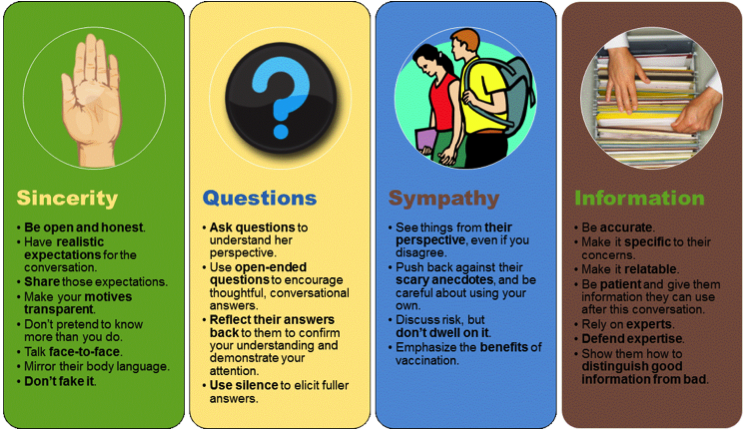
So what does a strategy for an effective, persuasive conversation look like? There is a world of advice we could give about that conversation. We’ve distilled it into four basic points: be sincere, ask questions, be sympathetic, and provide information.
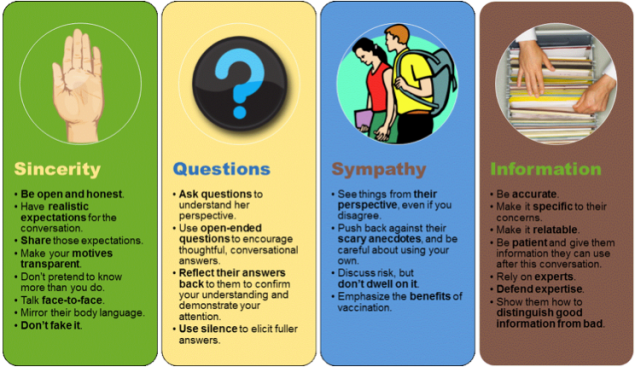
After the fold, we’ll go into some specific thoughts about each one. We want to stress, though, that this is just a framework. The conversation itself will be different every time. We want to know more about your conversations. If you’ve tried to talk someone into getting a child (or themself) immunized, please share your story in the comments section.
Continue reading →
0.000000
0.000000





 Violent metaphors