Nicholas Wade’s troublesome approach to scientific critiques

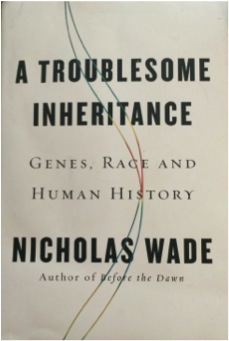
Nicholas Wade has a problem. Although his new book, “A Troublesome Inheritance: Genes, Race and Human History”, appears to be selling well, he’s not encountering the praise that he expected from biologists for “courageously” freeing them from the “intimidating social scientists” on the subject of race).
Plus ça change, plus c'est la même chose
Plus ça change, plus c’est la même chose


What is he arguing? I go over this briefly in my recent piece on the Huffington Post, and in much greater detail here on this blog, but essentially Wade is using patterns of human variation in populations as a justification for claiming that race is a valid, biological taxonomic category. He goes on to speculate (and that’s really the only word for it, since his claims are unsupported by the preponderance of scientific evidence) that these racial differences determine behavioral differences and thereby explain why some civilizations have historically been more successful economically and politically than others. (You can guess which races he’s talking about; his speculation happens to coincide neatly with traditional stereotypes.)

Wade claims that all critics of this viewpoint are motivated by political concerns and ignore data showing that races are genetically distinct enough to be meaningful taxonomic categories of humans. His book relies particularly upon one genomics study to support this point. In his words (emphasis mine):


Raff and Marks take issue with one of these surveys, Rosenberg et al. 2002, which used a computer program to analyze the clusters of genetic variation. The program doesn’t know how many clusters there should be; it just groups its data into whatever target number of clusters it is given. When the assigned number of clusters is either greater or less than five, the results made no genetic or geographical sense. But when asked for five clusters, the program showed that everyone was assigned to their continent of origin. Raff and Marks seem to think that the preference for this result was wholly arbitrary and that any other number of clusters could have been favored just as logically. But the grouping of human genetic variation into five continent-based clusters is the most reasonable and is consistent with previous findings. As the senior author told me at the time, the Rosenberg study essentially confirmed the popular notion of race.


It’s not a question of logic, but rather what the data show. Rosenberg et al. (2002)’s paper did not analyze or identify just 5 clusters, but rather it considered 1-20 clusters. What Wade is omitting from his paragraph above (and also from his book) is that Rosenberg and colleagues never presented any statistical justification for the choice of 5 clusters over any other number.

Here are the specifics of my criticism, which I posted in response to a commenter on my blog. (If you’re not interested in the statistical refutation of Wade’s argument, feel free to skip this paragraph. I hope Wade takes the time to read it, though). Continue reading

Nicholas Wade and race: building a scientific façade

“…for he has no right to give names to objects which he cannot define.” –Charles Darwin

Do “races” exist as meaningful biological categories? Physical anthropologists and human biologists have been studying race (i.e., blacks vs. whites, or Europeans vs. Asians) for centuries. For most of that time, they subscribed to the perspective that race was a taxonomic category, and they sought to identify the biological characteristics (such as cranial shape or skin color) that characterized and defined these different groups. This perspective assumed that each individual was a member of a single racial category, that the differences between racial categories were biological, and that these categories were predictive of other traits (such as ancestry, temperament, intelligence, or health).

But it gradually became clear that this understanding was not scientifically sound. Groupings of people by skin color did not produce the same result as groupings of people by skull shape, nor of blood type. Furthermore, as scientists began to study human variation with the tools of genetics (in the process creating my fields, anthropological genetics and human population genetics), it became apparent that human genetic variation does not divide humans into a few discrete groups. There are virtually no sharp boundaries, either with physical features or with patterns of genetic diversity, that show where one population “ends” and the next “begins”. Continue reading

What an ancient Paleoindian girl tells us about Native American prehistory

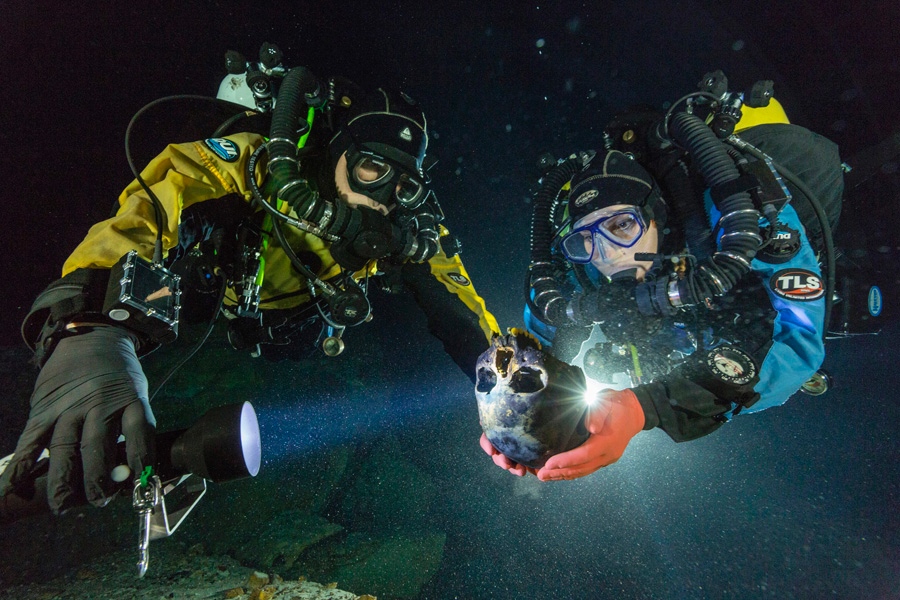
1.15226_chatters1HR
Photo by Paul Nicklen/National Geographic from http://www.nature.com/news/mexican-skeleton-gives-clue-to-american-ancestry-1.15226?WT.mc_id=TWT_NatureNews


More than 12,000 years ago, a young teenage girl walking through a deep cave (known today as Hoyo Negro) fell down a massive pit. The fall fractured her pelvis, and she died among the remains of giant ground sloths and saber-toothed cats who had met a similar fate. Over the next few millennia, the pit filled with water and their bones were covered with cave formations. They were left undisturbed until discovered in 2007 by cave divers, who named the girl “Naia” in a reference to Greek mythology.

Today, a team of archaeologists and geneticists announced the results from sequencing her mitochondrial genome. She possessed a haplogroup (D1) that evolved in Beringia and is seen in modern Native Americans.

So why is this result so important? The Hoyo Negro girl, like other Paleoindians (the oldest inhabitants of the Americas), had a skull shape that was distinctive from later (younger than 9,000 years before present) ancient Americans, who more closely resembled modern Native Americans. Continue reading

What would it take to convince you?

Hard at work
Hard at work


I am currently working on both a fellowship and a manuscript, so instead of writing a longer piece here, I’m issuing everyone a challenge. I have seen it repeated multiple times throughout the comments here that there seems to be evidence “on both sides” of the vaccines issue, and therefore people should just “go with their gut.” I reject that approach as lazy (at best). Whether or not vaccines are safe and effective is an empirical question, and therefore it should be answerable with data.

If there is any theme to this blog, it would be:  Not all evidence is equivalent, and it takes training and a willingness to admit to ignorance in order to be able to identify good evidence from bad evidence. So how can the average person begin to sort out which information is good, and which is bad? There are many approaches to this question, which I will be exploring further in the coming weeks. But the first one is to honestly take inventory of one’s own knowledge: do you actually understand this issue? Do you, for example understand how the immune system works? No? Then you’d better read more and learn more on the subject before wading into the debate.

A second important step is assessing other people’s knowledge on the subject. This can can be difficult as it’s awfully easy to sound “smart” on the internet. I want to simplify this step here by asking everyone (anti-vaccine, pro-vaccine, or “undecided”) a single question: What kind of evidence would change your mind on this issue? This question has come up several times in our discussions (most recently, I believe, in the comments of gewisn), and I think the answers are so revealing that I want to devote an entire post to it.

Please be as specific and honest as possible. Please define any jargon. If you are talking about specific studies, please cite them so everyone can read them. This comments section will be more heavily moderated than usual in order to keep the discussion on track. Comments that do not answer the question, or go off on tangents will be deleted (although I won’t ban you from discussions unless you violate my general commenting policy).

A note of thanks, and a request.

As we approach the end of what’s basically been “Vaccines Month” here on Violent Metaphors, I want to take a moment to sincerely thank all parents who have responsibly vaccinated their children. In particular, I want to acknowledge those parents who had concerns about vaccines, but took the time to educate themselves and trusted their brains instead of their fears. Not only are your children safer because of your decision, but you have also helped protect countless children (and adults) who you will never meet.


I see your efforts and appreciate them!


I also want to express my gratitude to everyone who has participated in the comments, and taken a moment to share these posts with others. You may have gotten into uncomfortable discussions because of it, but know that your collective efforts are far more meaningful than any single post we can write here. By taking a public stand against pseudoscience, you have given voice to the thoughts shared by the majority of people, who are far too often intimidated by the clamoring of the fearful minority.

This site has had quite a bit of traffic in the last month, and the ad revenue that such traffic has generated is therefore considerably greater. When that happens, I typically donate a chunk of the proceeds (above what is needed to run the site) to a charitable organization. Usually I give it to an animal rescue organization (a cause dear to my heart), but I thought that since the amount this time was likely to be more substantial, I’d ask you to vote on which charity you would like to support.

Here are the options that I’ve thought of (in no particular order). Please let me know your preference (as well as any concerns you might have about these particular charities) in the comments.


The Autism Science Foundation : http://www.autismsciencefoundation.org/

Doctors Without Borders: http://www.doctorswithoutborders.org/

Red Cross: http://www.redcross.org/

St. Jude Children’s Research Hospital: http://www.stjude.org/stjude/v/index.jsp?vgnextoid=f87d4c2a71fca210VgnVCM1000001e0215acRCRD


How the immune system works: Contrasting perspectives from science and alternative medicine

One of the biggest issues I’ve seen again and again in the comments sections of every vaccination article is a fundamental lack of understanding of how the immune system works. Many people talk vaguely of “toxins”, “pathogens” and “immunity”, but it’s clear that they have no idea exactly how this works. So I thought that I’d invite a regular commenter, Dr. Scott Nelson, to write an explanation. I think that Dr. Nelson, who teaches this subject in university courses, has done an excellent job of making a complex topic accessible to people who are not scientists or physicians.  (Note that we have provided hyperlinked definitions of many of these terms from Wikipedia for convenience. Dr. Nelson and I have both reviewed them and agree that they’re accurate. If you would like additional information beyond what is provided here, we recommend consulting any basic major textbook).

If you are “doing your own research” on vaccines, I urge you to read all the way through the end, and then watch the video, which shows an animation of the processes that Dr. Nelson describes.  Finally, because I think it’s important to illustrate the vast differences between the scientific explanation of how the immune system works, and the “alternative medical” explanation, I’ve included the homeopathic version at the end of the post. I encourage you to share your thoughts on which you find most compelling, and why. My comments following Dr. Nelson’s are in bold

–Jennifer

A common thread through many anti-vaccine posts is fear about “all the stuff that you are jabbing into a kid”. I would like all the people who think this to perform a simple experiment. Take a piece of meat-any meat-make sure it’s fresh and smells good. Put it on the counter in a nice warm place-about body temperature-cover with a screen if you like. Let it be for three days and then look at it carefully, note all the different shapes and colors. If you know somebody with a microscope, scrape a bit of stuff off and look at it under a microscope. How many different things do you see now? Each spot, each color, each bug you see under a microscope represents something that the immune system is dealing with every second of everyday. After all-wasn’t it exposed to the exact same air that you’re breathing right now? Your body is that piece of meat-your immune system is what keeps it from rotting. Right now, our best estimates are that there are 10 microorganisms for every cell in your body. Your immune system “knows” them all and has responded in various ways, which science is currently exploring. Continue reading

Open thread: please share your thoughts!

My most recent post (“Dear parents, you are being lied to”) has sparked a very lively discussion. I encourage you to continue to share your thoughts on it, but I also want to follow up by asking for your reactions to one comment that I found particularly interesting. (I’ve edited it a bit for brevity)

As a pediatrician who’s spent extensive time working in the US and overseas and has seen children die from EVERY disease (except small pox) for which there is a vaccine I am appalled at the lack of education by the general public on the vaccine issue. This is my rant: I had two unvaccinated children in the US die from whooping cough, one from tetanus, and 2 from meningitis in the past few years. Perhaps this reflects our country’s generally poor understanding of math and science in general. A recent large study in the US showed that no matter how scientists try to educate US parents about disease and disease prevention, whether it is vaccines or hand washing, parents simply cannot follow the logic.

It’s devastating to see children die from preventable disease and despicable that it is happening here. I would like to know why those whose children end up in the PICU with tetanus or whooping cough now trust us to save the life of their child? Why do you run to a doctor when you are terrified your child has tetanus after refusing to vaccinate? Why am I now competent to save your child’s life when they have meningitis or epiglottis, but I wasn’t competent enough to keep them from getting sick? If there was no medical help for your unvaccinated child if they acquired a vaccine preventable illness would you think about vaccinating? If you’re not willing to run to your anti-vaccine friend, treat your child with advice from non-scientific sites on the internet, go to your chiropractor, or your holistic healer with your dying child perhaps you shouldn’t be taking their advice about vaccines. —Anonymous

To those of you who simply don’t trust the medical community’s use of vaccines, I am curious what you make of this physician’s point. Given your reservations about vaccines, do you trust an MD to treat yourself or your children for any medical issues at all? If so, why do you trust his/her education and experience on some points but not others?

I invite anyone, pro- or anti-vax, to share your thoughts on this. Please respect each other by following the commenting policies (and feel free to alert me if I miss a comment in violation of them).


Dear parents, you are being lied to.

Standard of care.

In light of recent outbreaks of measles and other vaccine preventable illnesses, and the refusal of anti-vaccination advocates to acknowledge the problem, I thought it was past time for this post.

Dear parents,

You are being lied to. The people who claim to be acting in the best interests of your children are putting their health and even lives at risk.

Continue reading

Problematic science journalism: Native American ancestry and the Solutrean hypothesis

This is the second post in a series discussing the recent publication of a 12,500 year old genome from Montana. You can find the first post here.

In the weeks following the publication of the complete genome from a Clovis child, there’s been a lot of press coverage of this study and its possible implications. I want to discuss a bit of the media coverage on this subject, since it raises issues that I think science journalists need to consider more carefully.

First of all, to recap the major findings of the original study (discussed in more detail at the link above):
1. Anzick-1, the 12,500 year old Clovis child whose genome Rasmussen and colleagues sequenced, is very closely related to living and ancient Native Americans.
2. Anzick-1 is more closely related to Siberians than other Eurasian groups.
3. Anzick-1 is more closely related to Central and South American Native American groups than to some North American groups.
4. The results from Anzick-1’s genome fit with the scientific consensus about the peopling of the Americas. This consensus encompasses the results of decades of archaeological, genetic, and paleoclimate research.

Unfortunately, several press reports chose to find controversy in a decidedly non-controversial story by giving undue weight to problematic “alternative” explanations of Native American origins, including the Solutrean hypothesis, and other “European contributions” to Native American ancestry.

140214_NEWSCI_NativeAmeGenome.jpg.CROP.promovar-medium2
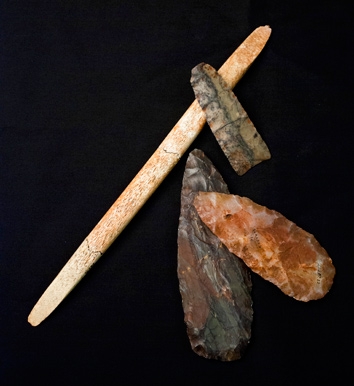
Clovis tools from the Anzick site. From Rasmussen et al. 2014.

Continue reading

The Dangers of Magical Thinking in the Martial Arts

This post comes courtesy of Jeff Westfall, someone I’ve known and respected as a leader in the martial arts community since I moved to Indiana in 1992. I’m absolutely delighted that he agreed to share his insights into pseudoscience in the martial arts with us. You can read details of his background on his school’s website here. –Jenny

I’m Jeff Westfall for the Martial Brain

Recently on Facebook I saw a video of a Finnish martial artist named Jukka Lampila who called what he did Empty Force or EFO, and claimed that with it he could control an attacker without touching him. His Facebook page proclaims him the founder of EFO. The video begins with clips of Lampila fending off ‘attacks’ from his students. He waves his arms; sometimes he twitches, and in each case the ‘attacker’ seems to be magically thrown to the mat without ever being touched by Lampila. He also shows an example of ‘controlling’ someone on the ground. He kneels calmly beside a supine student with the back of his hand gently resting on the man’s chest. “I don’t need to use any energy” he asserts as the student appears to try with all his might to regain his feet to no avail. It is a sad display of martial arts charlatanism.

Continue reading