The Most Important Playground Conversation: How to Persuade a Friend to Vaccinate

by Colin McRoberts

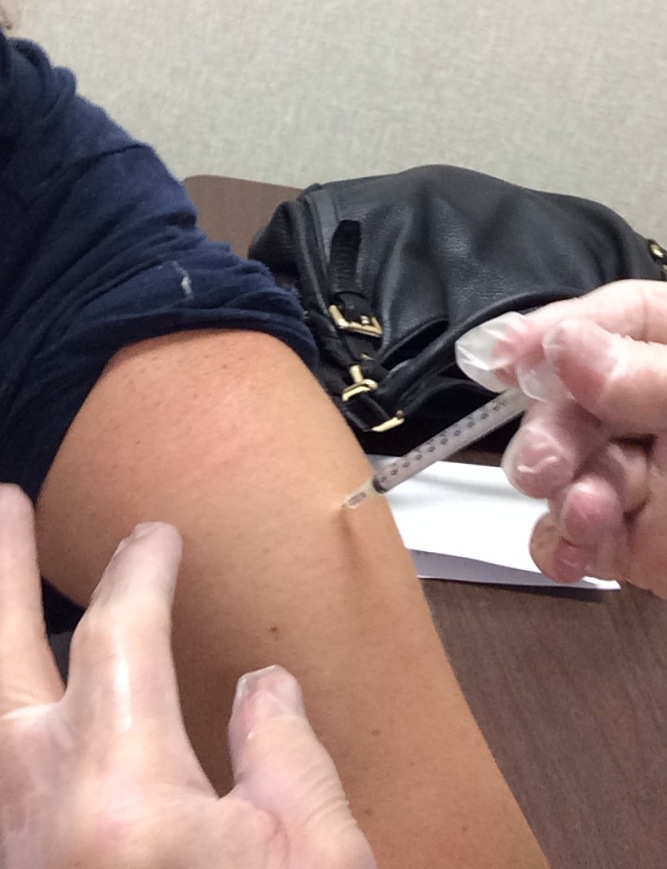
A while back a friend asked me to help with a difficult conversation. Someone she cared about was expecting her first child, and had decided not to vaccinate her baby. My friend desperately wanted to change the mother’s mind to protect that child. But she wasn’t sure how to proceed. She had the facts on vaccines, and knew that refusing immunizations was a dangerous and irresponsible decision. But she wasn’t sure how to convince her friend of that without jeopardizing their relationship. There are some excellent resources for health care providers having this conversation with patients. But there wasn’t much that applied to her particular situation. So she asked me whether my experience as a negotiator gave me any insights that might help her plan for what was sure to be a difficult conversation.

As it happens, I had been thinking about the same thing. I’m particularly interested in how laypeople should approach a conversation like this, since laypeople can be much more persuasive than the family physician. In the real world, our family and trusted friends very often carry more weight than experts. The giant but useless homeopathy industry would collapse otherwise. So when you hear that one of your friends or relatives doesn’t plan to vaccinate, you have the opportunity for a conversation that could potentially change their mind and save that child from terrible harm.

Unfortunately, too many people approach that conversation timidly, without a solid strategy for persuading their friend. That makes it hard to respond when things take an unexpected twist, such as your friend spouting off antivaxer talking points you hadn’t considered. Other people are too aggressive, treating the conversation like the comments section of a blog post. That kind of combative and confrontational dialog can feel good, but it doesn’t accomplish much in the real world.

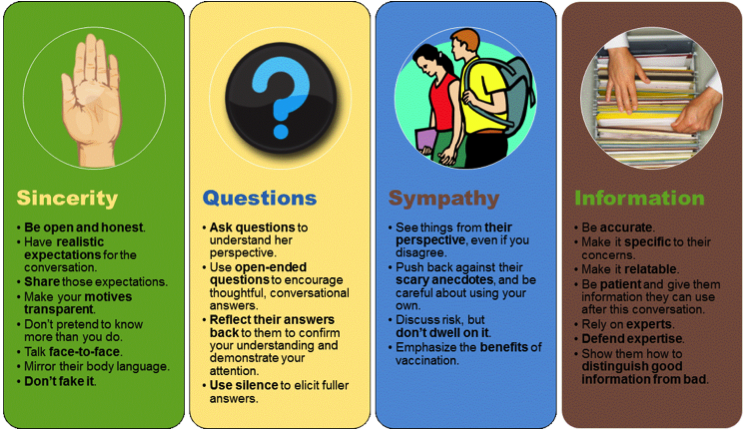
So what does a strategy for an effective, persuasive conversation look like? There is a world of advice we could give about that conversation. We’ve distilled it into four basic points: be sincere, ask questions, be sympathetic, and provide information.
Picture1

After the fold, we’ll go into some specific thoughts about each one. We want to stress, though, that this is just a framework. The conversation itself will be different every time. We want to know more about your conversations. If you’ve tried to talk someone into getting a child (or themself) immunized, please share your story in the comments section.
Continue reading


How to become good at peer review: A guide for young scientists

Peer review is at the heart of the scientific method. Its philosophy is based on the idea that one’s research must survive the scrutiny of experts before it is presented to the larger scientific community as worthy of serious consideration. Reviewers (also known as referees) are experts in a particular topic or field. They have the requisite experience and knowledge to evaluate whether a study’s methods are appropriate, results are accurate, and the authors’ interpretations of the results are reasonable. Referees are expected to alert the journal editor to any problems they identify, and make recommendations as to whether a paper should be accepted, returned to the authors for revisions, or rejected. Referees are not expected to replicate results or (necessarily) to be able to identify deliberate fraud. While it’s by no means a perfect system (see, for example, the rising rates of paper retractions), it is still the best system of scientific quality control that we have. In fact, it’s such a central part of the scientific process that one can often identify questionable scientific findings by their authors’ objections to the rigor of review (and attempts to circumvent it by a variety of methods, including self-publication).

Yet the quality of this system is ultimately dependent on the quality of the reviewers themselves. Many graduate programs don’t explicitly teach courses on how to review papers. Instead, a young scientist may learn how to review a paper under the guidance of his or her mentor, through journal clubs, or simply through trial and error. I’ve been thinking about this topic a lot, and decided to put together a set of guidelines for young scientists. In doing so, I also hope to help non-scientists understand a bit more about the process.

I intend for this to be an evolving post, so I ask for my colleagues’ help in improving it. At the end the post, I’m assembling a list of resources for further reading. If you have any suggestions or resources, please send them to me and I’ll add them. Continue reading

Katie Couric’s irresponsible and misleading “Conversation” on the HPV vaccine

This afternoon Ms. Couric’s show “Katie” featured the “HPV Vaccine Controversy” as part of its “Big Conversation”. The segment focused mainly on the vaccine Gardasil, which is administered to girls and boys around the age of 11, in an effort to immunize them against HPV before they become sexually active and likely to contract the virus.

Although Couric herself claims that she is personally “not anti-vaccine”, her show was extremely biased against the scientific consensus. She kept referring to the vaccine as “controversial” when there are no legitimate scientific studies showing it to be dangerous. I’m used to getting upset at journalists who give false equivalency between the scientific consensus on an issue on the one hand and a fringe belief on the other. But this was beyond the pale; Couric’s program didn’t even aspire to that “balance”.

Continue reading

Why does the media want you to believe that we are primate-pig hybrids?

I had a “driveway moment” last night listening to Alex Jones rant about science topics on his radio program. He was obsessed with the hypothesis that humans are the descendents of a primate-pig hybridization. I had heard of it as it first made the rounds back in July, but I assumed that no one would take it seriously and ignored it. But the Daily Mail recently has not only reported it uncritically, it also called Dr. Eugene McCarthy’s evidence for this hypothesis “compelling”. I guess I shouldn’t find that surprising, because the Daily Mail routinely presents quackery as mainstream scientific findings.

What really drew my interest in the subject was the way Alex Jones discussed the news article.

Continue reading

Why anti-vaxers hate the NVICP (and just what is it, anyway?). –by Colin McRoberts

From http://en.wikipedia.org/wiki/United_States_Court_of_Federal_Claims

Orac is reporting that a planned Congressional hearing into the National Vaccine Injury Compensation Program has been canceled. This is unambiguously good news; the hearing was probably a political favor being done for anti-vaccine cranks who despise the NVICP. Their hatred for the Program can be confusing, given how much better it is for their position than the alternative.

Continue reading

Cultural sensitivity is fashionable, too. –by Andy Hurley and Jennifer Raff

When Andy Hurley performed with Fall Out Boy for the 2013 Victoria’s Secret fashion show on November 13th, he was given a costume to wear that included a shirt with the Rising Sun on it.

The Rising Sun symbol, used by the Imperial Japanese Army during World War II, has come to represent horrors of wartime aggression (such as the Nanking Massacre) to many, particularly South Koreans and Chinese people.

The Rising Sun symbol is horribly offensive to descendants of people affected by these events, much like the Nazi Hakenkreuzflagge or the Confederate flag. Yet unlike those symbols, it continues to be used widely.

Many people simply don’t understand the connotations of this symbol. But after he was made aware of it, Andy and I felt that this incident would provide a good opportunity to heighten awareness of its cultural context. Here are his thoughts.

Continue reading

Does aggression define manhood?

“You’re going against 40,000 years of evolution”

“This innate toughness that men have is crucial to our survival.”

These points, and many others along the same lines, were made by Mr. Gavin McInnes, author of “How To Be a Man” in a recent discussion of masculinity on the Huffington Post. His argument is based on a suite of assumptions common in our culture. It often forms the basis of misogynist arguments against feminism. Basically:

1. Evolution has made men naturally more “aggressive and tough”, and women naturally more “compassionate and domestic”.

2. Therefore in the modern world, as in past societies, men are the natural breadwinners, and women the natural caretakers of the home/children.

3. Going against these gender norms, as feminism has done in the last few decades, is going against nature, and disrespectful of the importance of childcare!

According to Mr. McInnes, women who work outside the home are “forced to pretend to be men. They’re feigning this toughness. They’re miserable.” You’ll hear a lot of people agreeing with this line of reasoning. But is it scientifically based? Continue reading